I am creating Eudaemon, a free app for building good habits. Completely free.
because everything costs money today.
For a few weeks now, I have been working on a personal project that is taking up quite a lot of my time. It’s called Eudaemon and it is an application that will be available for Android, iOS, and Windows.
The idea is very simple: to help maintain good habits without complicating everything with subscriptions, limitations, and locked features.
One important thing, however: the app is still in full development. What you see in the screenshots is a non-final version, and there are many things I still want to add and improve. Some features are already present, others will come in time.
Why I decided to create this app
The idea was born after trying several apps dedicated to habits.
Almost all of them work well, but there is always something that asks you to pay.
Some allow you to create only a few habits.
Others lock statistics behind a subscription.
Still others place limitations even on features that should by now be considered basic.
Personally, this has always bothered me quite a bit. I understand charging for advanced features, but when you have to reach for your wallet to see statistics or simply add a few more habits, in my opinion, the point of the app is lost.
So, instead of continuing to look for the perfect app, I decided to build it myself.
The goal is very simple: to create a completely free alternative that anyone can use without having to constantly unlock features with a subscription.
Keeping track of your habits
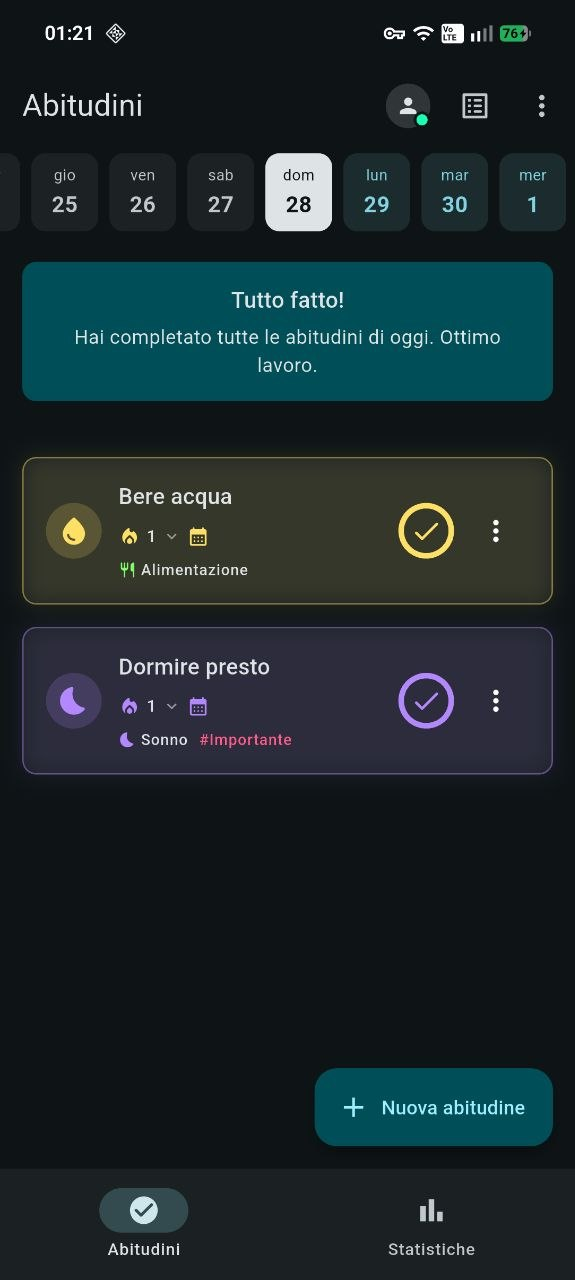
The app allows you to create your own habits, choose when to receive a notification, mark those completed during the day, and have everything organized on a single screen.
The idea is to make everything as simple as possible. You open the app, see what you need to do today, check off what you have completed, and you’re done.
Customize every habit as you prefer
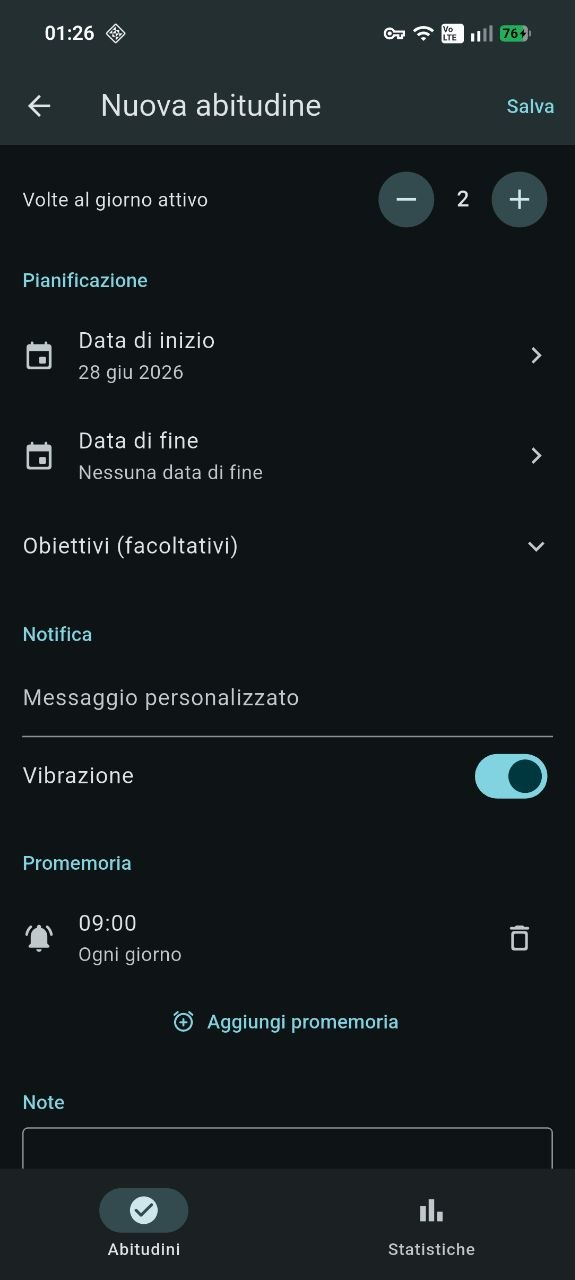
Each habit can be customized. You can change the name, set notifications, modify the frequency, choose the days of the week, and configure everything you need.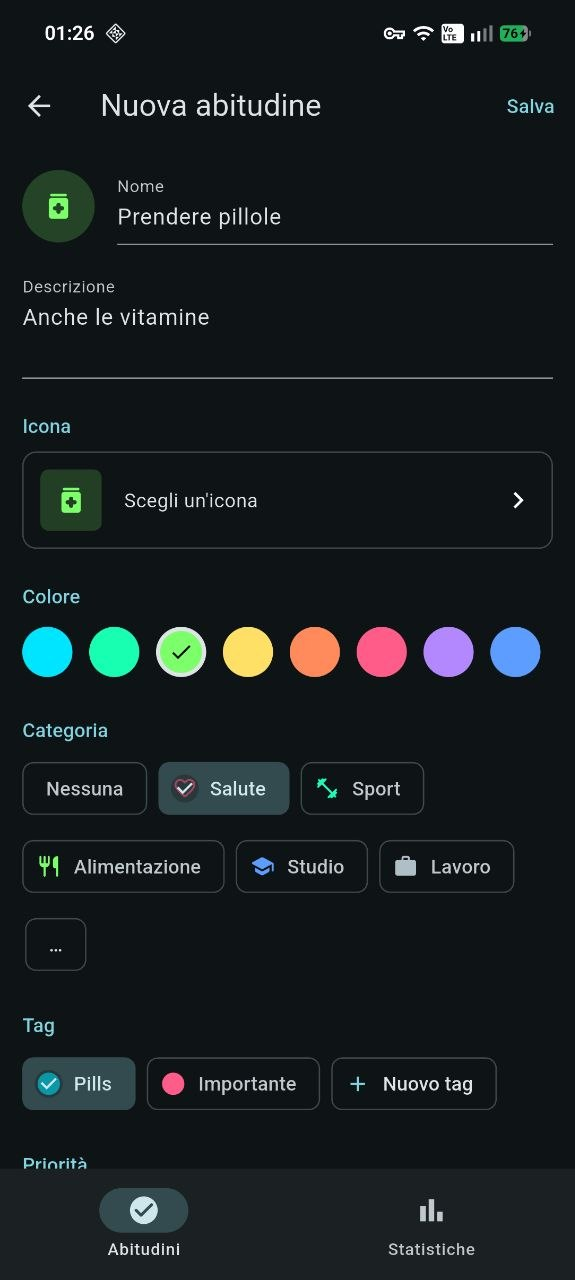
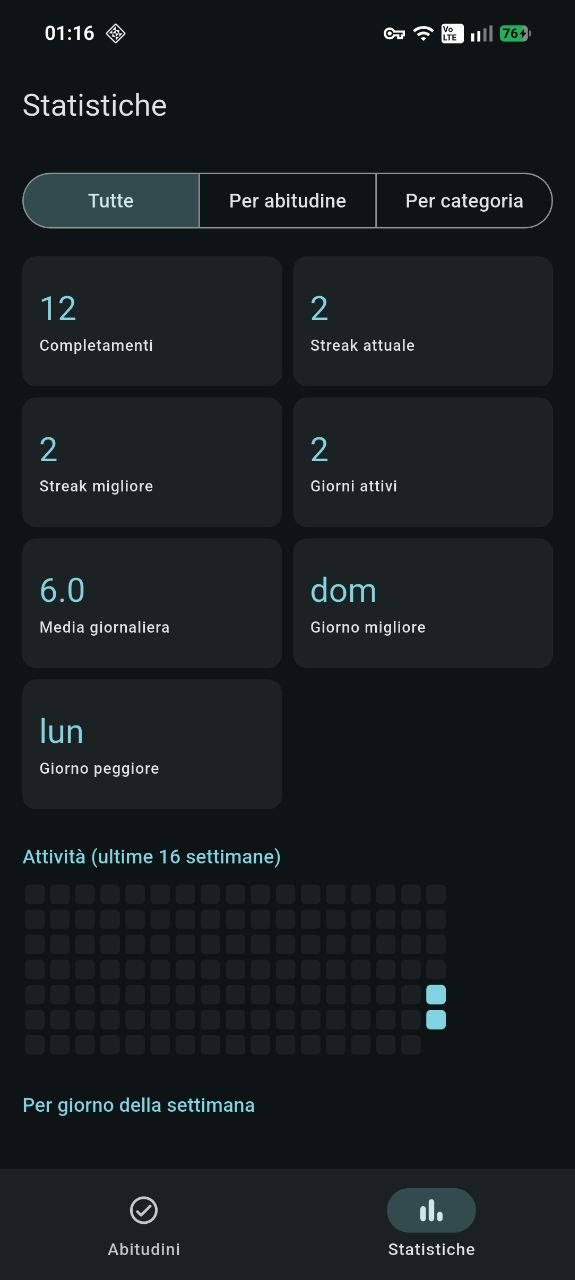
Calendar and statistics
One of the things I consider fundamental is being able to see how your progress is going.
For this reason, Eudaemon includes a calendar where you can see the days completed and a screen dedicated to statistics, so it is possible to understand if you are maintaining a certain consistency or if there are periods where you tend to give up.
For me, these are basic features. It makes no sense to lock them behind a subscription.
Behind the scenes
From a technical point of view, I decided to develop Eudaemon using Flutter with Dart 3. I wanted a single codebase that would allow me to publish the same application on Android, iOS, and Windows without having to maintain three separate projects.
For data management, I use Drift as a local database. All habits, the calendar, history, and statistics are saved directly on the device, so the app works even without an Internet connection and remains very fast.
For language support, I am using gen_l10n, the official Flutter system for localization. I preferred to prepare the project from the beginning for multi-language support instead of adding it in the future, so it will be much easier to translate the app into other languages when the time comes.
Obviously, the code will also continue to evolve along with the app. There will certainly be refactoring, new libraries, and changes to the architecture as I add new features.
The project is just at the beginning
I already have a fairly long list of features that I want to implement and, most likely, that list will continue to grow over time.
For me, this project is also a way to seriously enter the world of application development. I have always developed software, websites, and personal projects, but creating a complete cross-platform app is a different challenge and, honestly, I am enjoying it quite a lot.
I hope that, once published, Eudaemon can be useful to those who, like me, were looking for a free alternative without having to pay every month to use features that should be standard by now.
And who knows, maybe this will be just the first of many projects in the world of app development. :)